As I prepare the flowers for Pascha each year, I never think of them as decoration. For me, this is a small offering—my way of translating what we believe into something visible and alive. Every element I choose carries meaning, and the floral arch with white lilies has become, for me, a quiet expression of the Resurrection itself.
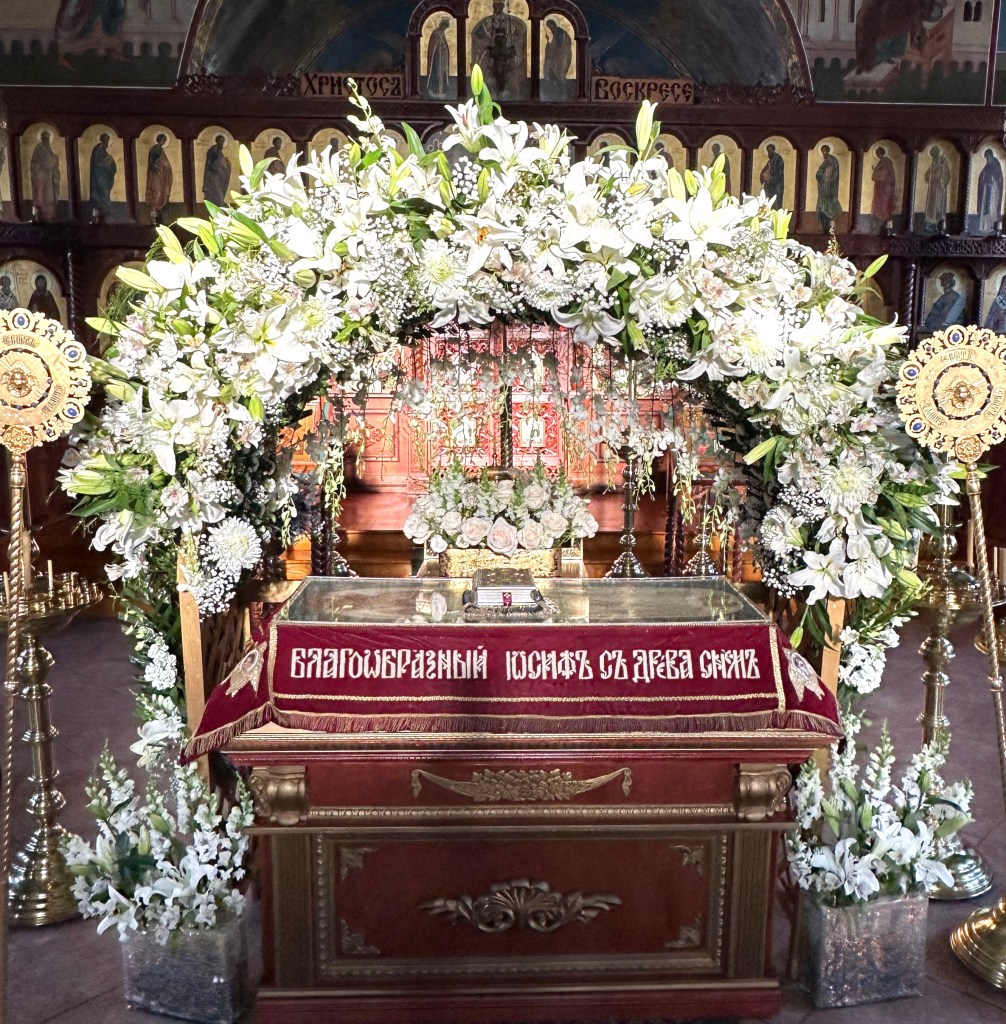
I think of the arch first as the cave—the tomb where Christ was laid. The Gospel tells us it was a rock-hewn tomb, a new place (Gospel of Matthew 27:60; Gospel of John 19:41–42). But when I build this “cave” from flowers, I never imagine it closed. There is no stone. It is open. Because when we come to Pascha, we already know—the tomb is empty. Christ has left it. So the arch becomes not a place of death, but a witness that death has already been overcome.
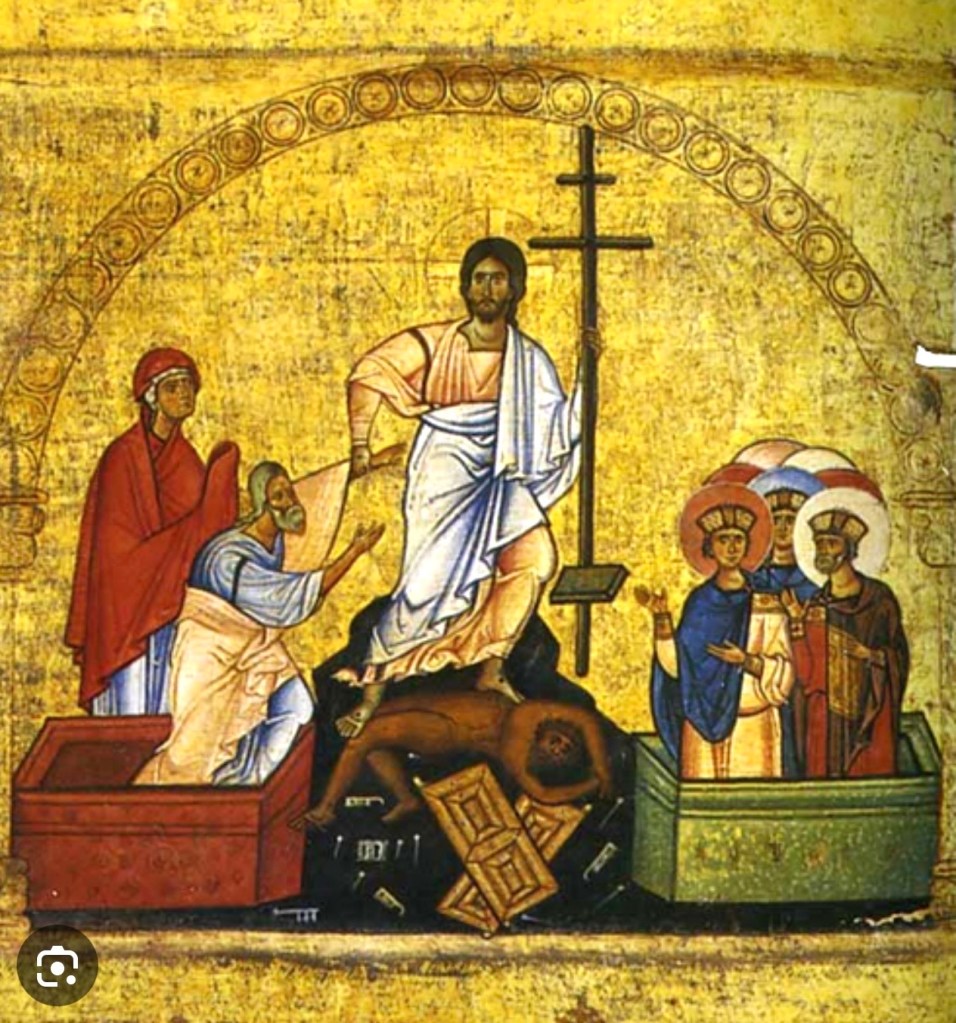
At the same time, I cannot separate this shape from what we see in the icons of the Resurrection—the Descent into Hades. In so many early icons, Christ stands over the broken gates of hell, pulling Adam and Eve into life. Those gates are no longer closed. They cannot hold anyone anymore. For me, the arch echoes those gates—once shut, now opened forever. It becomes a passage, a threshold. And standing before it, I always feel that Pascha is exactly that moment: we are invited to step from death into life.
I choose white very intentionally. White, in the Church, is not just a color—it is light. It is purity, but also something more: a new state of being. The angel at the tomb is described in garments “white as snow” (Gospel of Matthew 28:3), and the prophets speak of being clothed in salvation (Book of Isaiah 61:10). For me, white flowers carry that same message—they speak of a life that has been transformed, illuminated, made new.
And lilies… I always come back to lilies. Many people simply associate their fragrance with Pascha—and that matters too, because Pascha is something we experience with all our senses. But lilies also carry a deeper meaning: they are a symbol of purity and one of the few flowers that are mentioned throughout Scripture.
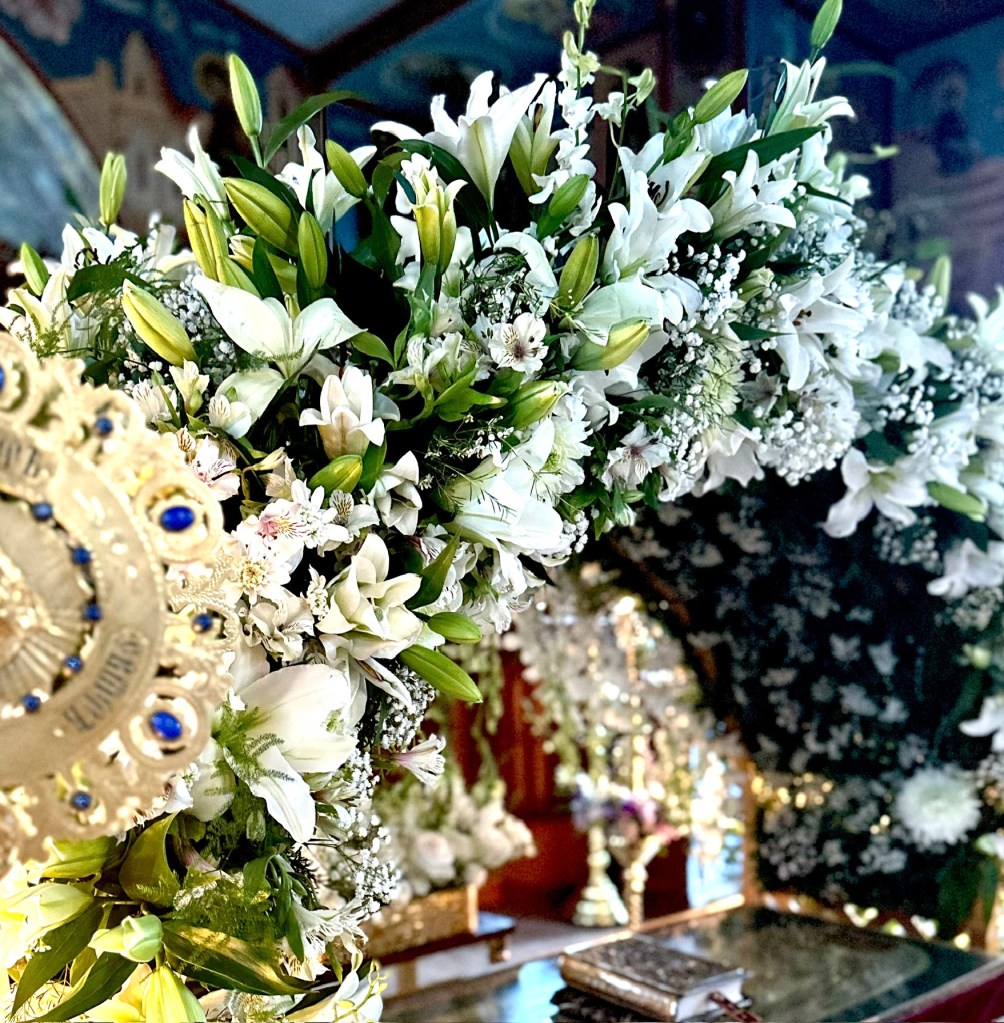
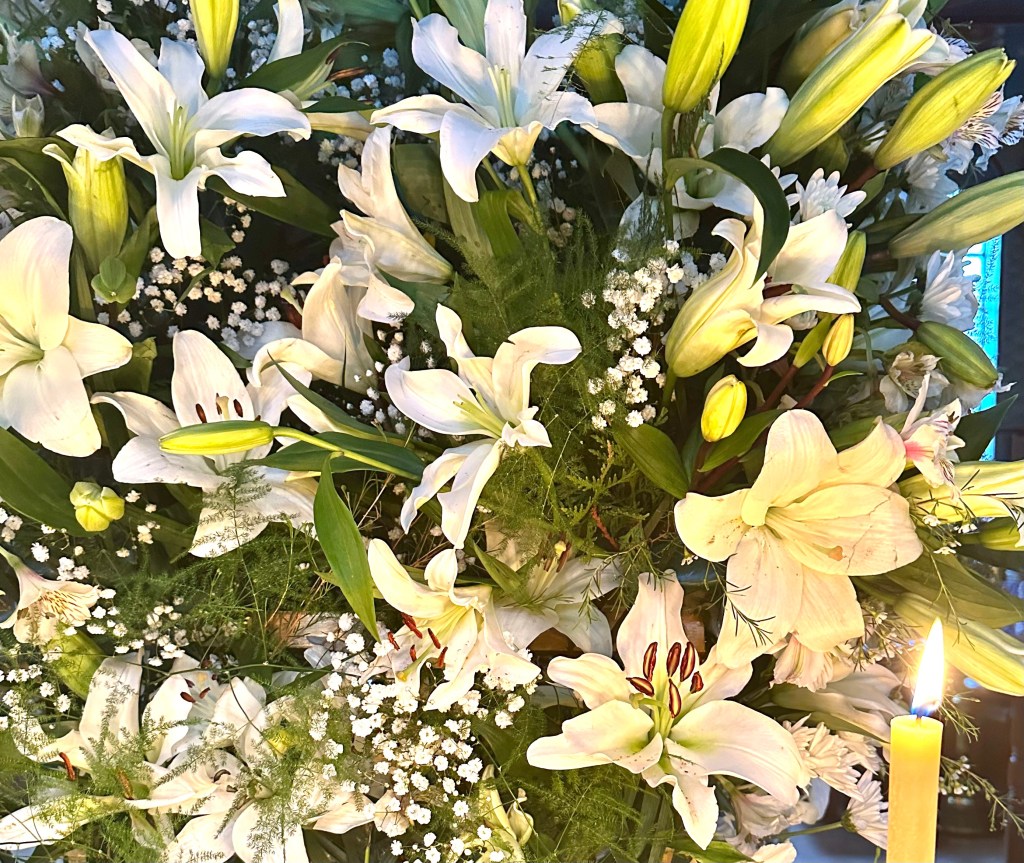
In the Old Testament: “He shall blossom like the lily” (Book of Hosea 14:5)—a promise of renewal and life. In the New Testament, Christ Himself says: “Consider the lilies of the field… even Solomon in all his glory was not arrayed like one of these” (Gospel of Matthew 6:28–29; see also Gospel of Luke 12:27). To me, this is deeply Paschal. Lilies do not struggle to become beautiful—they just grow. They are a subtle image of resurrection: life that is given, not earned.
When I put all of this together—the open arch, the white flowers, the lilies—I don’t see an arrangement. I see a message. The cave is empty. The gates are open. Life has come through sacrifice, and it is offered freely.
This is my way of speaking without words, but with flowers.
From a technical perspective, the arrangement is built around a foundation of white blooms chosen for both structure and meaning. I used oriental and asiatic lilies as the primary flowers, complemented by alstroemerias, large chrysanthemums, and roses. The spaces between them are softened with baby’s breath, creating a sense of lightness and continuity rather than density.
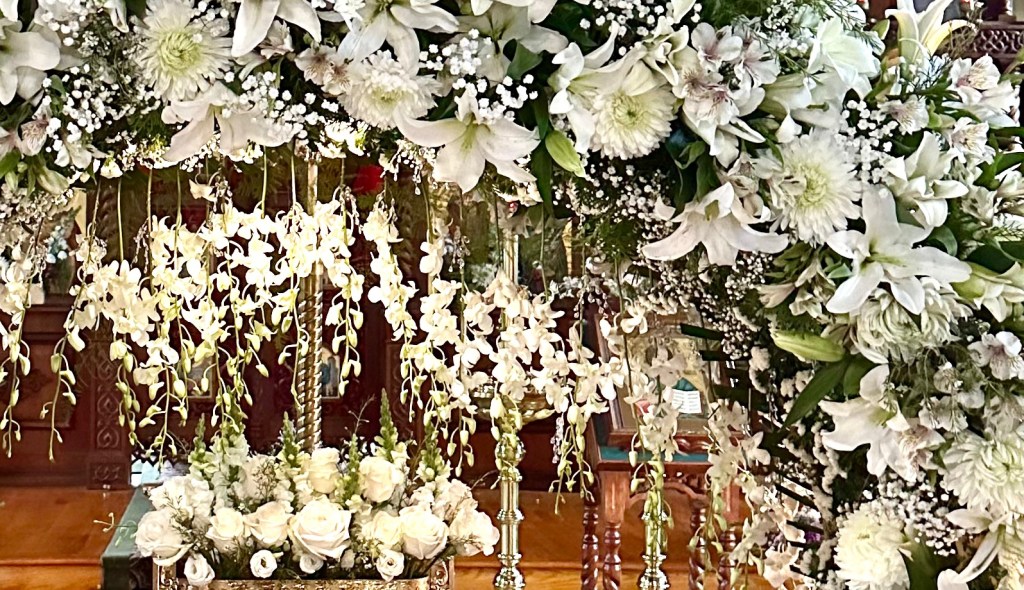
The backdrop is formed by cascading white dendrobium orchids, suspended so that they gently fall toward the Plashchanitsa. I added small crystals to these hanging strands, allowing them to catch the light and resemble tears—at once sorrowful and joyful—quietly directed downward toward Christ.
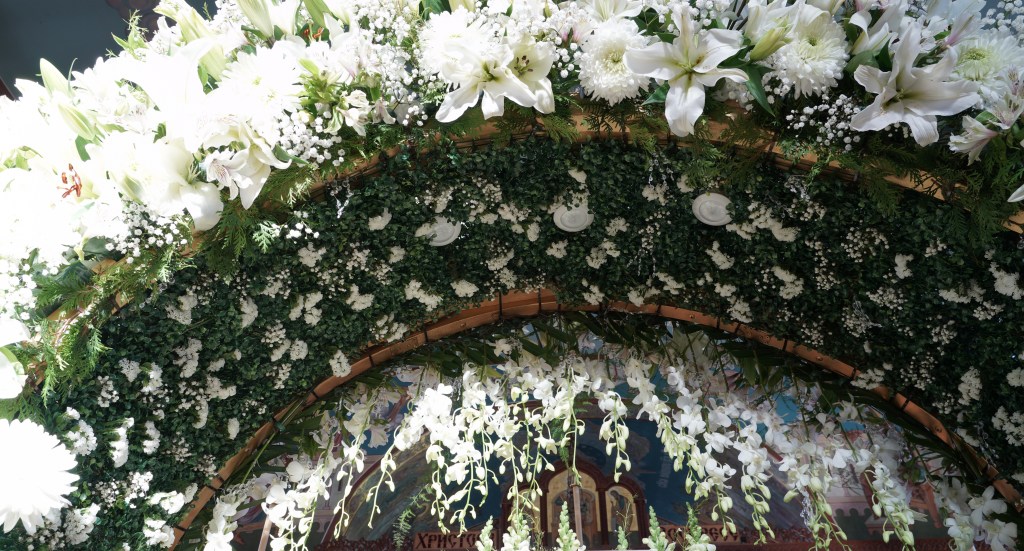
At the base of the arch, I placed a layer of white baby’s breath and statice, so that Christ rests surrounded by flowers, almost as if embraced by them. This lower layer softens the visual boundary between the earthly and the sacred, completing the composition from above and below.
Above the main icons of Christ and the Mother of God, I placed floral arrangements that carry both symbolic and structural meaning. The base of each arrangement is formed by jeweled crowns used as vase covers, pointing to Christ as the King of Heaven.
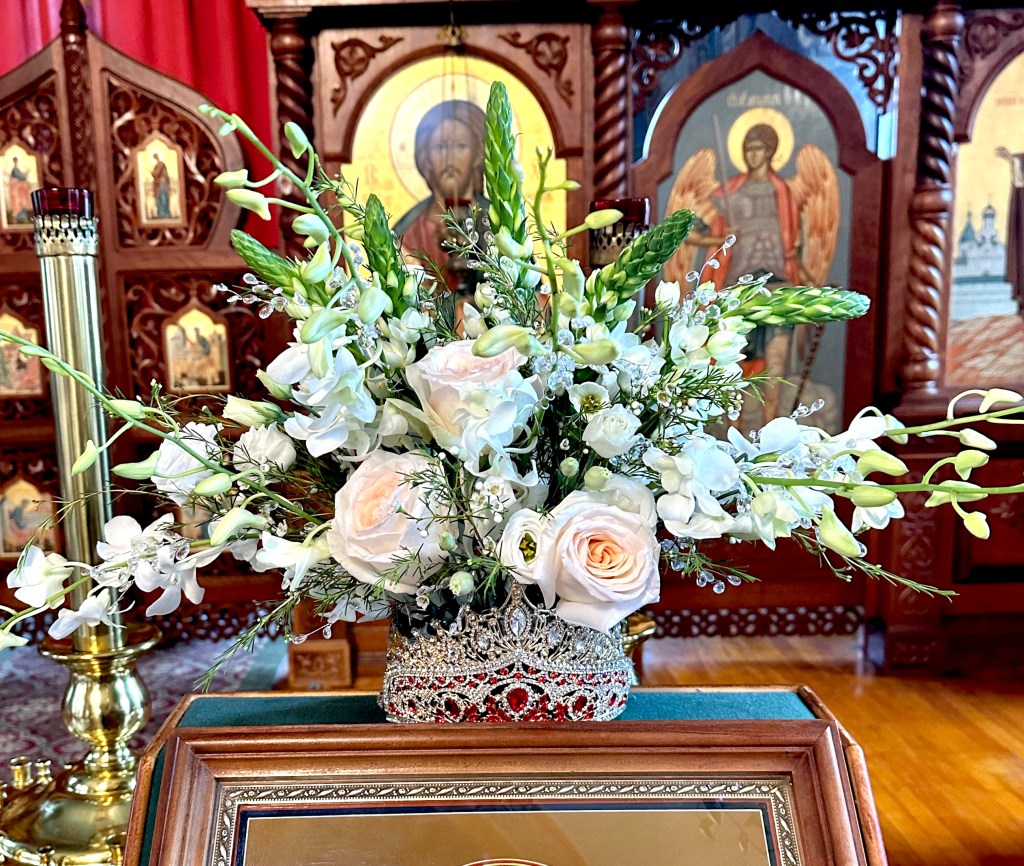
Within the arrangement, I used three large roses to reflect the Trinity, placing them at the center so that they anchor the composition. Around them, I added white dendrobium orchids combined with Star of Bethlehem, whose symbolism needs little explanation—naturally evoking light, guidance, and divine presence..
Small crystal elements are woven throughout, catching the light and appearing almost as tears—expressing both sorrow and joy, which are inseparable in the Paschal moment. These details soften the composition and bring a sense of quiet emotion, directing the eye gently toward the icon below.
Together, the flowers above the icons do not stand apart from them, but serve as a continuation—framing, honoring, and reflecting the presence they surround.
These arrangements were created for St. Sergius Orthodox Cathedral in Parma.

